
learn
Reading a Chinese Temple
A field guide to gates, courtyards, halls, side buildings, and the route your body takes through a temple compound.
Begin with the axis
Most temple visits begin before you enter a hall. The sequence from gate to courtyard to main hall teaches hierarchy through movement.
A plan is not only geometry. It organizes attention, ritual approach, crowding, and pauses.
Look sideways
Side halls and secondary courtyards often carry the site's real complexity. They can hold donors, protective deities, local cults, later repairs, or museum interpretation.
A temple like Huayan or Shanhua should be read as a compound, not reduced to one famous building.
Read repair as history
Ancient temples are rarely untouched survivals. Repairs, reconstructions, and relocated objects are part of their history. A careful visitor asks what survives from which period, not whether the whole site is pure.
Worth Checking Before You Go
Huayan and Shanhua are better read as temple compounds with multiple halls than as single isolated buildings.
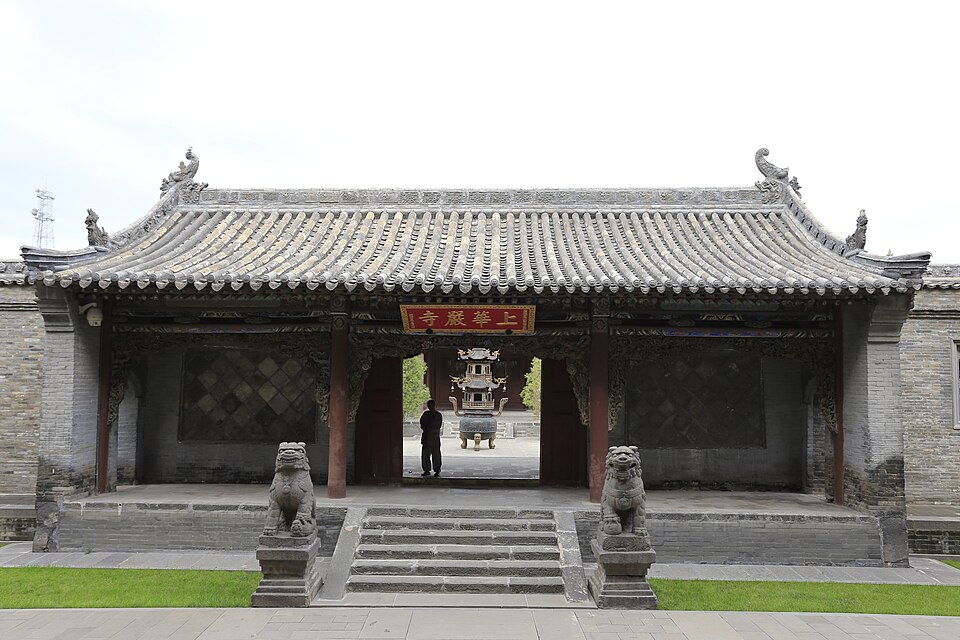 Datong temple
Huayan Temple
A major Datong temple whose Liao-Jin halls and sutra-storage culture show the city's Buddhist and imperial afterlives.
- Prefecture
- Datong
- Dynasty
- Liao-Jin
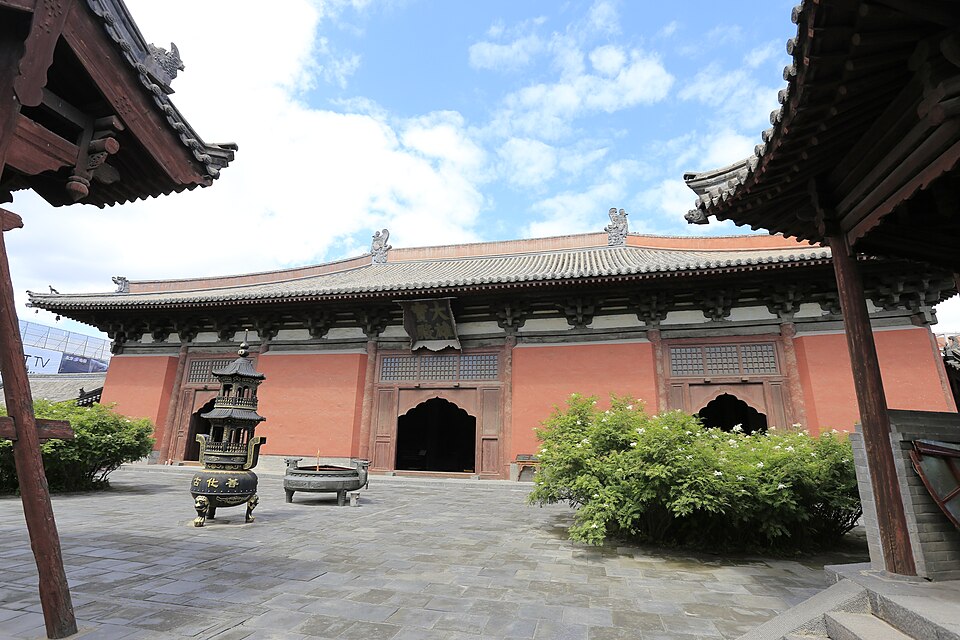 Datong axis
Shanhua Temple
A quieter Datong axis where Liao-Jin halls and Buddhist protective imagery reward slow comparison with nearby Huayan Temple.
- Prefecture
- Datong
- Dynasty
- Liao-Jin
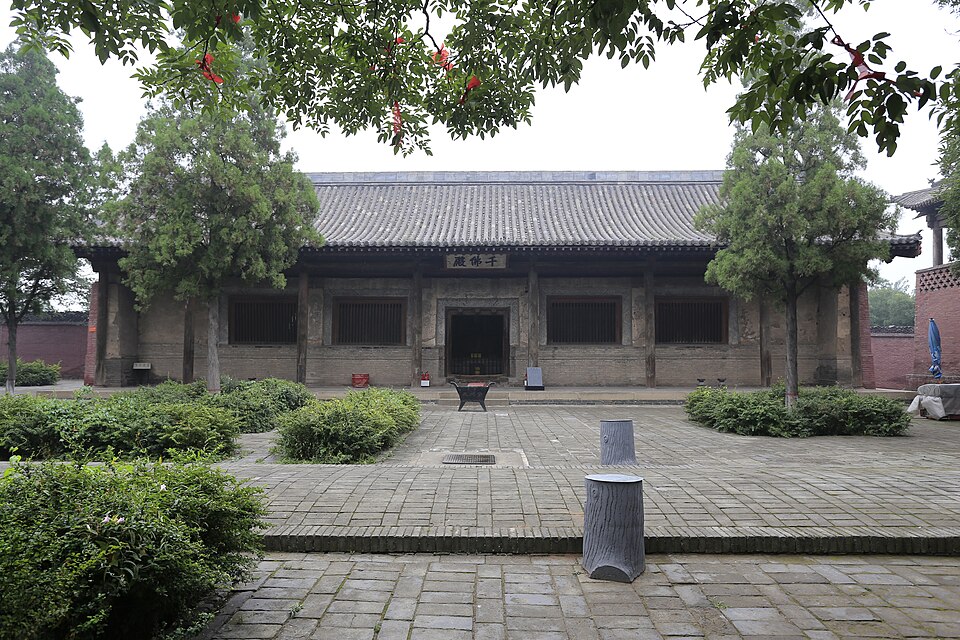 Painted figures
Shuanglin Temple
A Pingyao-area temple whose large corpus of painted clay sculpture turns temple halls into a museum of religious figures and social types.
- Prefecture
- Jinzhong
- Dynasty
- Northern Qi foundation; Ming-Qing fabric
Glossary
dougong / 斗拱 dou gong
hipped-gable roof / 歇山顶 xie shan ding
hipped roof / 庑殿顶 wu dian ding
overhanging gable roof / 悬山顶 xuan shan ding
flush gable roof / 硬山顶 ying shan ding
mortise-and-tenon / 榫卯 sun mao
shanmen / 山门 shan men
Tianwang Hall / 天王殿 tian wang dian
Daxiongbao Hall / 大雄宝殿 da xiong bao dian
bell tower / 钟楼 zhong lou
drum tower / 鼓楼 gu lou
pagoda / 塔 ta