
story
Where Black Myth Leads in Shanxi
A visitor-friendly guide from Black Myth curiosity to real Shanxi caves, timber halls, sculpture, and routes.
The useful part of the attention wave
Black Myth: Wukong did something rare: it made people who had never planned a Shanxi trip ask where those cliffs, halls, statues, and colors came from.
This guide starts from that curiosity, then moves toward the places themselves. The point is not to hunt for a perfect screenshot match. It is to use the new attention as a reason to look more slowly.
Three ways into Shanxi
Start with the landmarks that explain Shanxi at large scale: Yungang Grottoes, Mount Wutai's timber world, Yingxian Wooden Pagoda, and the Pingyao area. They give first-time visitors a stable frame.
Then add the interiors that made the online imagination move: Xiaoxitian's suspended sculpture, Shuanglin's painted clay figures, and Yuhuang Temple's Twenty-eight Mansions. These are not just dramatic rooms; they teach you how Shanxi turns image into space.
Finally, keep the route architectural. Datong's Huayan and Shanhua temples, Jinci's shrine landscape, and Guangsheng Temple's pagoda-and-mural context stop the trip from becoming only a list of viral surfaces.
How to use this guide
Pick a region before you pick individual names. North Shanxi works well around Datong, Yungang, Hanging Temple, and Yingxian. South Shanxi is better for sculpture-heavy travel from Linfen toward Jincheng. The Wutai-Pingyao-Taiyuan line asks for a slower timber-and-shrine rhythm.
Before you go, check current opening hours, reservation rules, photography limits, and transport. Ancient sites are not theme sets; access can change with conservation work, weather, crowds, and local management.
Worth Checking Before You Go
ChinaEaves does not display Black Myth: Wukong screenshots, logos, character art, key art, or Steam-store assets.
Public reporting connected Shanxi ancient architecture tourism with the Black Myth: Wukong attention wave.
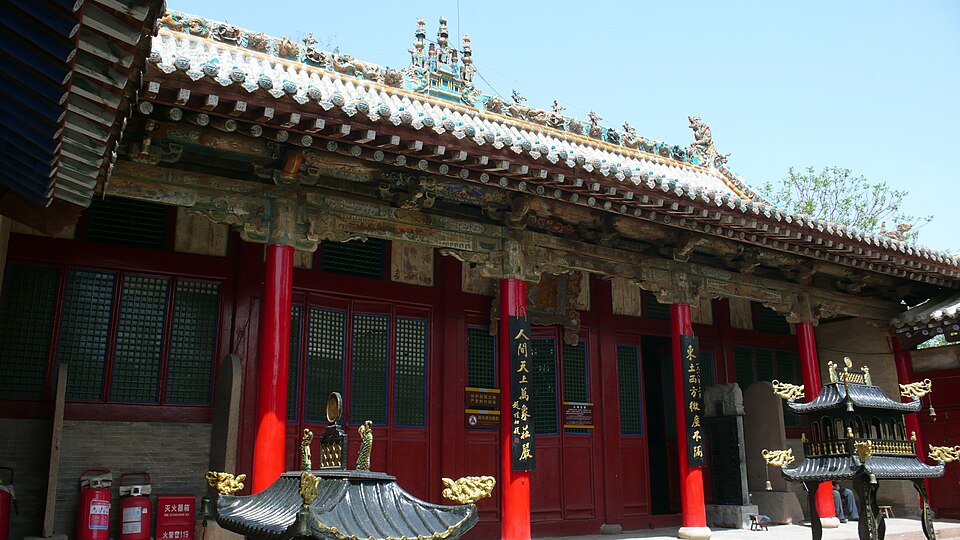 Sculpture
Xiaoxitian
A compact Ming Buddhist temple in Xi County whose dense suspended sculpture turns a small hall into a cosmic stage.
- Prefecture
- Linfen
- Dynasty
- Ming
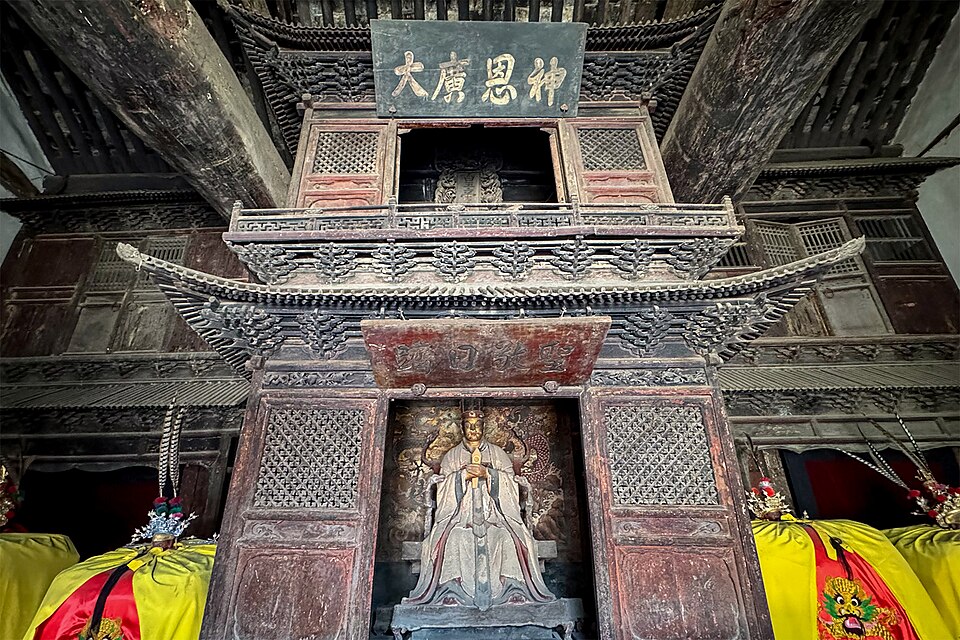 Twenty-eight Mansions
Yuhuang Temple, Jincheng
A Taoist temple in Zezhou whose personified Twenty-eight Mansions sculptures make astronomy, ritual, and painted clay sculpture meet.
- Prefecture
- Jincheng
- Dynasty
- Song origin; Yuan-Ming sculpture
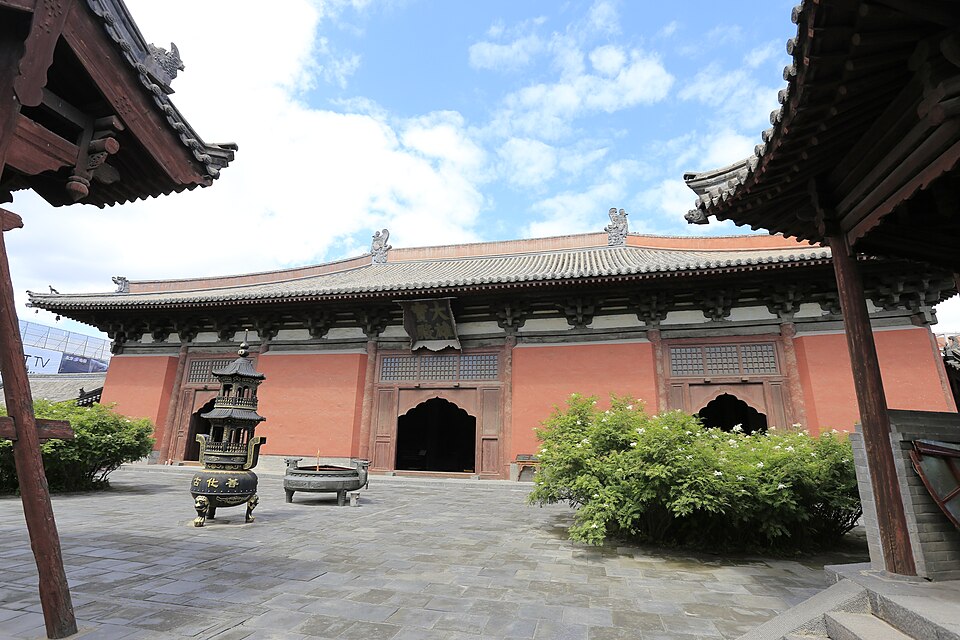 Datong axis
Shanhua Temple
A quieter Datong axis where Liao-Jin halls and Buddhist protective imagery reward slow comparison with nearby Huayan Temple.
- Prefecture
- Datong
- Dynasty
- Liao-Jin
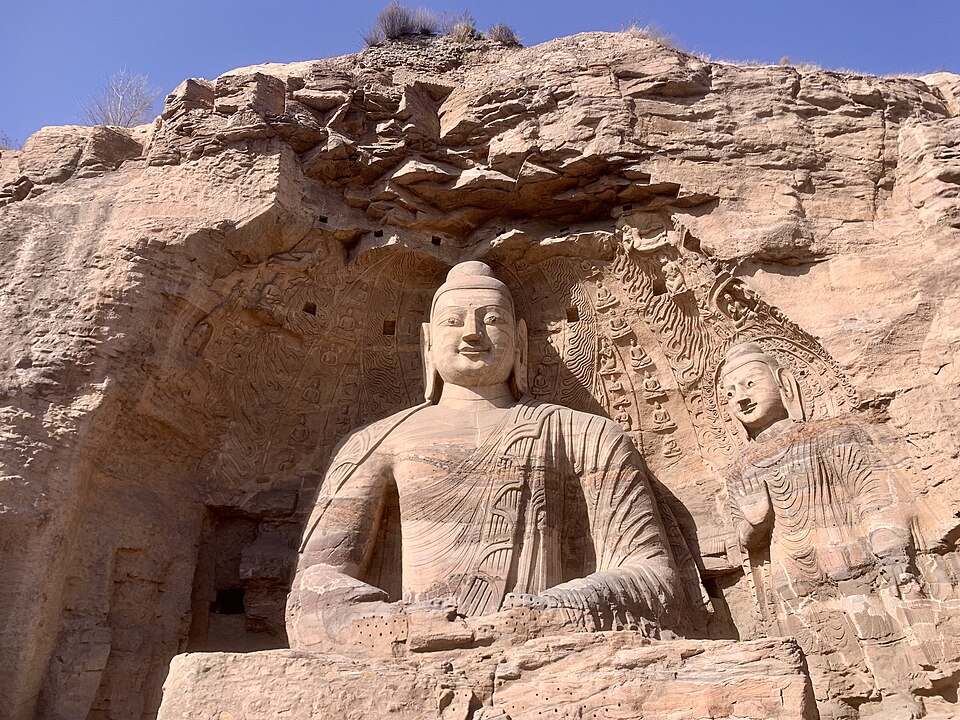 Caves
Caves
Yungang Grottoes
A UNESCO-listed cave-temple landscape where fifth- and sixth-century Buddhist carving turns Datong's sandstone cliff into an imperial image program.
- Prefecture
- Datong
- Dynasty
- Northern Wei
 Timber tower
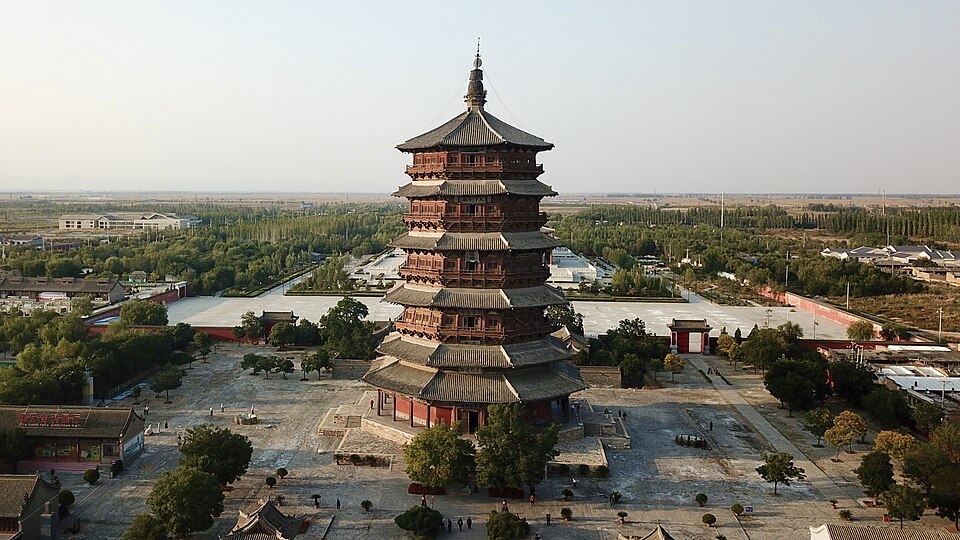
Yingxian Wooden Pagoda
An 11th-century Liao timber pagoda whose height, octagonal plan, and nested floors make it the clearest vertical timber lesson in Shanxi.
- Prefecture
- Shuozhou
- Dynasty
- Liao, 1056
 Painted figures
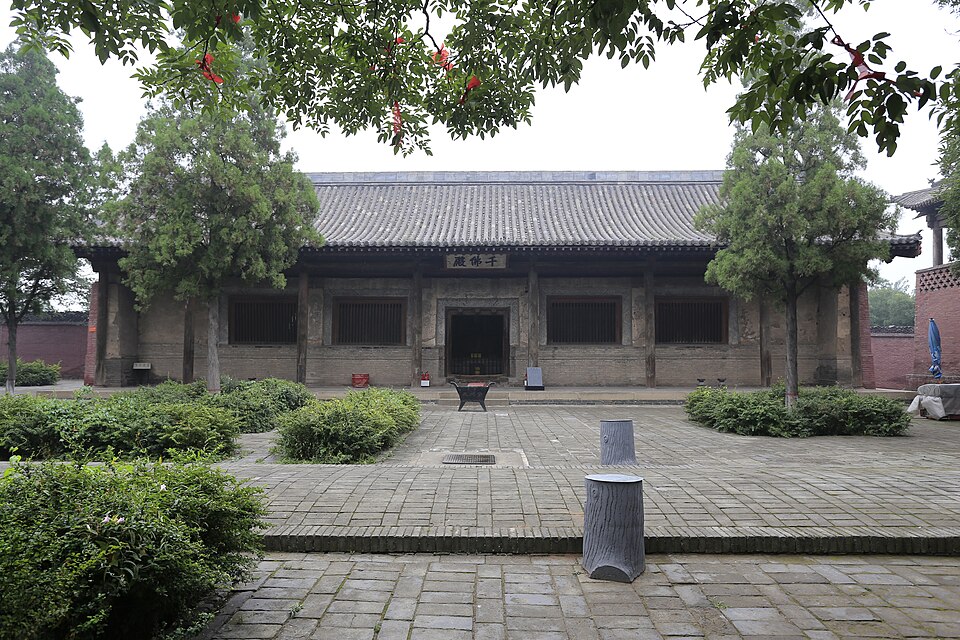
Shuanglin Temple
A Pingyao-area temple whose large corpus of painted clay sculpture turns temple halls into a museum of religious figures and social types.
- Prefecture
- Jinzhong
- Dynasty
- Northern Qi foundation; Ming-Qing fabric
Where This Page Draws From
- China Daily: Shanxi ancient sites after Black Myth: Wukong
- Beijing municipal portal: Xiaoxitian relics exhibition
- Encyclopedia of China: Twenty-eight mansions clay sculpture of Yuhuang Temple at Jincheng
- UNESCO World Heritage Centre: Yungang Grottoes
- UNESCO World Heritage Centre: Mount Wutai
- UNESCO World Heritage Centre: Ancient City of Ping Yao